
Views: 0 Author: Site Editor Publish Time: 2026-07-26 Origin: Site


Standard decorative nets degrade rapidly under continuous exposure to sun, wind, and moisture. You face severe operational risks when you choose poor materials for outdoor environments. Sun bleaching, dry rot, and structural tearing can ruin a deployment and leave your equipment exposed. We created this article to provide a clear, technical evaluation framework. We will help you select commercial, tactical, or heavy-duty residential nets. These materials are specifically designed for permanent or extended outdoor deployment.
We outline the operational risks of poor material selection versus the benefits of specifying the correct denier, coatings, and structural reinforcements. You will understand how proper material selection prevents catastrophic failure in the field. Let us explore the performance metrics of synthetic fabrics. You will learn how to choose the right concealment gear for your specific environmental challenges.
Fabric density matters: 210D to 300D Oxford polyester offers the optimal balance of weight and tear resistance for prolonged exposure.
Coatings determine lifespan: True outdoor longevity requires factory-applied UV inhibitors and polyurethane (PU) treatments, not just aftermarket sprays.
Structural backing is non-negotiable: Unsupported fabric will fail in high winds; structural mesh grids are required for installations exceeding temporary use.
Safety standards dictate deployment: Fire-retardant and anti-glare treatments are necessary for compliant tactical, commercial, and public-facing applications.
Outdoor netting faces relentless punishment from the elements. We must examine the specific environmental stressors that destroy untreated fabrics.
Ultraviolet radiation (UV) acts as the primary destroyer of synthetic materials. Prolonged sun exposure breaks down synthetic polymers at a molecular level. The photons snap polymer chains apart. This breakdown causes severe color bleaching over several months. The fabric eventually becomes brittle. It loses its tensile strength and easily crumbles upon impact.
Wind shear introduces massive tensile stress to deployed systems. We must consider the mechanics of wind loads on 3D leaf-cut fabrics. The die-cut leaves catch passing air currents. This action creates a strong sail effect. Unsupported spans suffer a high risk of catastrophic tearing during heavy storms. The material shears apart where the wind pressure exceeds the fabric's natural load limit.
Moisture and rot present another major challenge. You must understand the profound difference between moisture absorption and moisture shedding. Mold resistance serves as a critical baseline metric. Porous materials hold water tightly. This retained moisture accelerates biological decay. It also adds immense weight to the rigging.
Thermal variations rapidly destroy netting structures. Freeze-thaw cycles impact structural integrity directly. Rainwater seeps into untreated fibers. The temperature drops, and this water freezes into ice. The expanding ice shatters the weave from the inside. This cyclical process ruins fabric flexibility over time.
You must select the right material core to survive outdoor deployment. Oxford polyester remains the industry standard for outdoor environments. Polyester features incredibly low moisture absorption. It naturally sheds water better than natural fibers. It also carries a high baseline UV tolerance. This tolerance makes it ideal for prolonged exposure.
We evaluate Denier (D) ratings to determine overall durability. The denier number measures the thickness of the individual threads.
150D Polyester: Highly lightweight and cost-effective. Best suited for temporary shades, weekend camping, or indoor applications.
210D Polyester: The standard commercial grade. It offers an excellent balance of weight and tear resistance for permanent residential or moderate commercial installations.
300D Polyester: Heavy-duty industrial grade. It resists severe wind shear and is built for multi-year tactical or commercial deployments.
Ripstop nylon offers an alternative material core. We carefully evaluate its weight-to-strength ratio. Nylon is incredibly strong and light. The ripstop grid prevents small punctures from becoming massive tears. However, you face distinct trade-offs. Ripstop nylon costs significantly more than polyester. It also suffers faster UV degradation if left untreated. Ripstop nylon proves superior for mobile or tactical deployments requiring frequent packing and unpacking.
Fabric treatments dictate long-term colorfastness. Solution-dyed fabrics integrate color directly into the liquid polymer before spinning. This method locks the pigment deep inside the fiber. Piece-dyed fabrics merely apply color to the surface of the finished cloth. Solution-dyed materials vastly outperform surface-dyed fabrics under harsh sunlight. They retain their camouflage patterns for years.
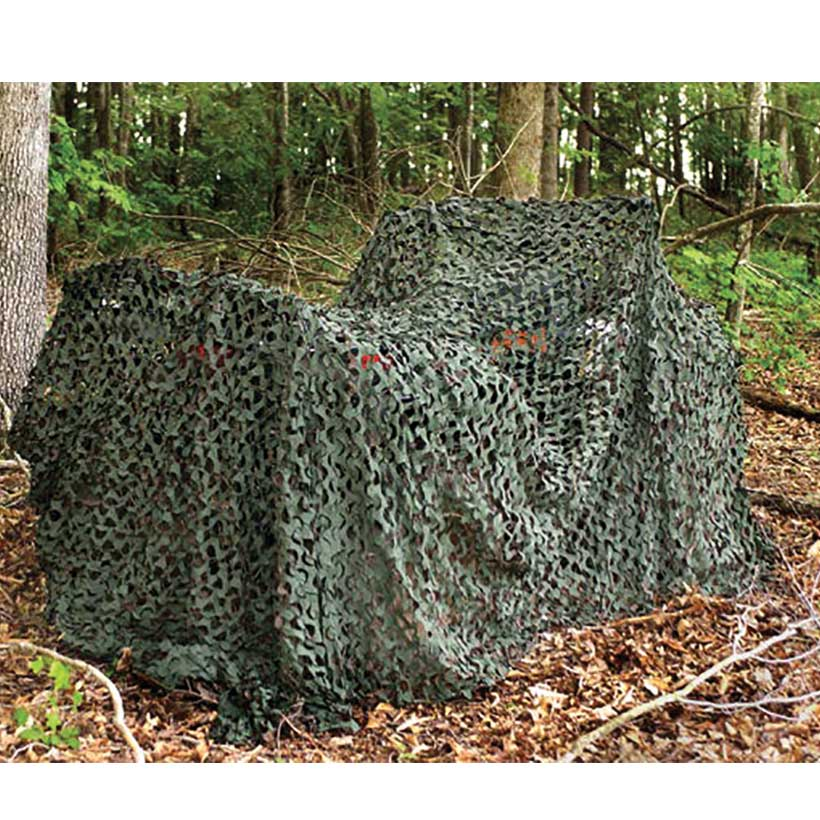
Let us examine the anatomy of a UV Resistant Camouflage Net. Manufacturers integrate chemical UV inhibitors directly into the polymer blend during extrusion. This factory-level integration outlasts simple aftermarket spray treatments. Sprays wash off over time, but embedded inhibitors protect the core structure. We evaluate expected lifespan ratings carefully. Seasonal netting might last one summer. Professional grades promise two to five years of continuous exposure in high UV index regions.
Next, we must define a true Waterproof Camouflage Net. Polyurethane (PU) coatings play a vital role here. Factories apply PU layers to repel water and prevent fabric waterlogging. You must distinguish between "water-resistant" and "waterproof" claims. Water-resistant material simply sheds light rain but eventually soaks through. Waterproof material achieves zero water absorption.
Zero absorption is absolutely critical for outdoor systems. It prevents heavy water weight from adding dangerous tension to your rigging. A waterlogged net can weigh three times its dry weight, causing support cables to snap.
Finally, rot and mold resistance require strict attention. Chemical treatments prevent biological degradation. Specialized biocides are mixed into the PU coating. These treatments remain vital in humid, tropical, or heavily forested environments where dampness persists for weeks.
A standalone leaf-cut fabric is entirely insufficient for long-term use. You need a dedicated mesh grid backing to ensure survival. A high-quality Reinforced Camo Net features specific structural architecture. Manufacturers integrate high-tensile nylon or paracord grid matrices behind the primary fabric. These grids typically use 5x5cm or 10x10cm squares.
The structural matrix bears the heavy physical loads. It distributes wind force evenly across the entire surface area. The fabric simply hangs from this load-bearing skeleton. This separation of forces prevents the delicate 3D leaves from tearing away under stress.
Edge binding and hemming keep the entire system intact. Double-stitched perimeter borders are an absolute necessity. Standard single stitching will fail. Heavy borders prevent the fabric from fraying at critical tie-off points. The border ropes transfer the tension from the anchors directly into the internal mesh grid.
Mounting hardware also demands careful evaluation. We compare standard fabric tie-down loops against stainless steel grommets.
Fabric Loops: Good for lightweight, temporary setups. They can stretch or snap under continuous high wind loads.
Stainless Steel Grommets: Essential for permanent installations. They handle much higher cable tension without distorting the fabric.
Anchoring Best Practices: Always secure the net tightly. Prevent any friction-induced failure. Loose netting rubs against poles, buildings, or tree bark. This continuous abrasion degrades the material very quickly.
Fire retardancy (FR) is paramount for professional deployments. You must navigate safety compliance carefully before installing large nets. Commercial shading, music festivals, and indoor or outdoor public spaces require strict FR ratings by law. Standard synthetic fabrics melt and drip dangerously when exposed to open flame. Always verify rigorous testing standards like NFPA 701 (US) or BS 5867 (UK) before purchasing. Compliant fabrics self-extinguish when the flame source is removed.
Visual and spectrum concealment define modern tactical applications. A professional Camouflage Net uses specialized anti-glare and matte finishes. Cheap plastics shine under direct sunlight. These matte treatments prevent unnatural light reflection, keeping your position hidden from visual spotting.
Advanced military and security applications require multispectral camouflage. Modern combat zones rely on more than human eyesight. High-end systems offer integrated infrared (IR) and radar defeating capabilities. These nets scatter thermal signatures and absorb radar waves, masking vehicles and personnel from drone surveillance.
Acoustic properties matter just as much as visual stealth. You need "rustle-free" material formulations. Stiff plastics crackle loudly when bent or blown. Advanced polyurethane treatments keep the fabric supple. These fabrics remain completely silent in high winds. Silent operation is a critical safety requirement for hunting, wildlife photography, and tactical surveillance missions.
You must clearly define the application first. Different environments demand different specifications. Residential patio shading prioritizes basic UV protection and visual aesthetics. You want a colorfast net that provides cooling shade. Tactical field operations prioritize multispectral defeat, acoustic dampening, and supreme physical durability. A patio net will fail in the field, and a tactical net is overkill for a backyard.
Verify vendor claims rigorously before making a decision. Watch out for clear red flags. Missing Denier ratings signal low-quality manufacturing. A lack of specific warranty details regarding UV fading is dangerous. Vague "heavy duty" claims mean nothing without concrete material specifications.
You must calculate sizing and rigging tolerances before deployment. You should factor in a specific stretch and sag rate for large spans. This calculation helps you determine the necessary frequency of anchor points.
Span Size (Square Meters) | Recommended Anchor Frequency | Expected Sag Tolerance | Required Hardware |
|---|---|---|---|
Up to 10 sqm | Every 1.5 meters | 2% - 3% | Heavy-duty zip ties or paracord |
10 sqm to 30 sqm | Every 1.0 meters | 5% - 7% | Carabiners and steel wire loops |
Over 30 sqm | Every 0.5 meters | 8% - 10% | Steel turnbuckles and tension cables |
Proper anchor spacing prevents catastrophic wind damage. Larger spans act as massive wind sails. The tension increases exponentially as the surface area grows. Always rig your system tight enough to prevent flapping, but leave enough flex in the supporting cables to absorb sudden wind gusts.
Selecting the right concealment material ensures uninterrupted field operations and prevents sudden structural failures. Do not compromise on base material quality when outfitting permanent outdoor sites. Your decision-making matrix should prioritize environmental shielding and structural architecture above basic aesthetics.
Pair a minimum 210D Oxford polyester base with factory-applied PU waterproofing to prevent waterlogging.
Ensure the fabric features integrated UV treatments to stop polymer breakdown and sun bleaching.
Demand a reinforced grid backing for any installation that will face moderate to severe wind shear.
Verify fire retardancy certifications if deploying in public spaces or commercial venues.
We recommend balancing your upfront procurement choices against the severe replacement risks of budget-grade netting. High-quality materials save you from the labor and operational downtime required to replace shredded fabrics after a storm.
A: Yes, but you must be careful. Unsupported fabric will unravel rapidly if cut. However, a net with a structural mesh grid handles cutting much better. You should cut along the mesh squares. Always melt the raw edges of the synthetic fabric and the paracord grid with a hot knife or lighter to prevent future fraying.
A: Lifespans vary heavily based on geographic UV index variations. In harsh, high-UV environments like deserts, a factory-treated net typically lasts 18 to 24 months. In moderate climates with partial shade, a high-quality 210D or 300D net can last three to five years before significant bleaching or brittleness occurs.
A: You should wash the net gently by hand using cold water and mild, non-detergent soap. Harsh chemicals and machine washing will strip the polyurethane (PU) waterproofing layer. Rinse it thoroughly and hang it to air-dry completely. Never store the net while wet, as this invites mold growth despite chemical treatments.
A: Yes, it significantly mitigates the wind sail effect. Unlike a solid plastic tarp that catches all air currents, the die-cut pattern allows wind to pass freely through the fabric. This airflow reduces the overall tensile stress on the anchor points and the underlying mesh grid, preventing structural tearing during storms.


