
Views: 358 Author: Site Editor Publish Time: 2026-08-13 Origin: Site


Setting up an outdoor basecamp often brings a common dilemma. You must choose between standard shade tarps, agricultural mesh, or a specialized Camouflage Net for reliable coverage. This single decision dictates comfort, structural integrity, and safety in unforgiving environments. People usually grab a solid tarp simply to block the sun. However, they quickly discover poor airflow, violent flapping, and trapped heat can ruin the entire experience. Evaluating these materials requires looking past basic shade provision. You must balance wind resistance, overall weight, and visual footprint. This guide provides an evidence-based comparison of popular outdoor covering materials. We explore how different meshes handle thermal regulation, extreme weather, and complex deployment scenarios. Read on to confidently select the exact material tailored to your specific operational and environmental needs.
Wind Resistance: Camouflage nets outperform solid tarps by eliminating the "sail effect" through 3D die-cut ventilation.
Thermal Comfort: Unlike solid coverings that trap heat, a concealment net allows ambient heat to escape, significantly lowering temperatures underneath.
Durability Limits: Camo netting requires mindful installation due to snagging risks; structural mesh backing is strictly necessary for large-span suspensions.
Use-Case Dependency: Solid tarps win for 100% waterproofing; camo nets win for ventilation, concealment, and high-wind deployments.
Many outdoor enthusiasts learn hard lessons during extreme weather. Heavy solid tarps often fail miserably in dynamic environments. We call the most notorious issue the "sail effect." A standard polyethylene tarp catches incoming wind just like a ship's sail. It billows violently under gusty conditions. Soon, metal grommets tear straight out of the fabric edge. Support poles bend or snap under the extreme tension. Open environments like beaches or desert plains punish solid fabrics relentlessly.
Next, you face the severe greenhouse effect. Heavy canvas and plastic sheets block direct sunlight efficiently. However, they also trap rising thermal energy underneath the canopy. This creates a suffocating microclimate. If you camp in the summer, this trapped heat makes your shelter unlivable. Agricultural users regularly see livestock suffer heat stress under solid roofs. Ambient heat needs a vertical escape route. Solid fabrics deny this airflow entirely.
Finally, consider your visual footprint. A stark blue or reflective silver tarp creates an unnatural eyesore. Black agricultural meshes look distinctly industrial. Hunters, overlanders, and wildlife photographers require seamless integration into the natural surroundings. Solid neon tarps compromise operational stealth. They completely fail when visual blending matters most to your mission.
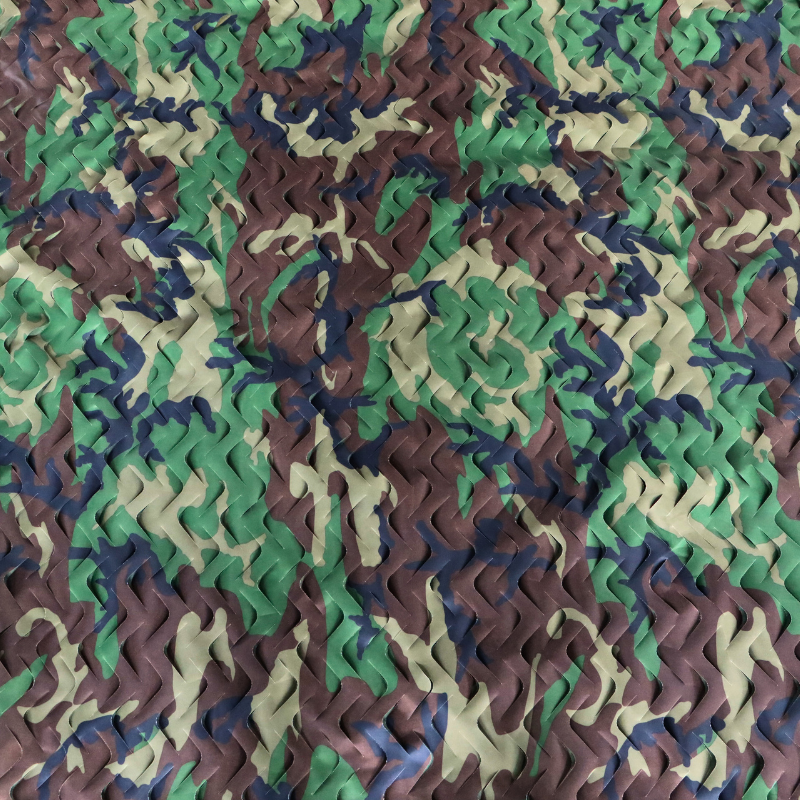
Evaluating your shelter material requires looking at four critical dimensions. You must understand how airflow, weight, UV density, and moisture resistance interact. You cannot maximize all four variables simultaneously. Material selection requires deliberate trade-offs.
Airflow and thermal regulation separate adequate coverage from excellent coverage. Traditional shade mesh blocks up to 90% of sunlight. Unfortunately, tightly woven agricultural mesh also restricts natural breezes. A proper Camo Netting setup solves this problem. It utilizes a highly specific 3D leaf-cut pattern. This design allows maximum wind pass-through. Ambient heat dissipates rapidly through the open gaps. The shaded area remains significantly cooler than the surrounding environment.
Next, we analyze the weight-to-coverage ratio. Heavy canvas tarps take up massive amounts of storage space. Vinyl coverings weigh down your vehicle or backpack. Conversely, specialized synthetic nets remain highly compressible. They fold down into surprisingly small stuff sacks. This lightweight nature reduces the physical burden on your supporting poles.
You must also evaluate UV protection and shade density. Standard shade sails cast a uniform, solid block of shadow. A modern Outdoor Camouflage Net operates quite differently. It creates an irregular, dappled shade effect. You typically get between 60% and 80% coverage. This mimics sitting beneath a dense tree canopy. It provides excellent UV relief while maintaining ambient brightness.
Finally, weather resistance dictates overall material longevity. Let us clarify a critical assumption right now. These nets shed water effectively. High-quality synthetic materials resist rot and mold natively. However, they are not waterproof roofs. Rain passes directly through the cut foliage. If you need bone-dry gear, a solid tarp remains absolutely necessary.
Evaluation Metric | Solid Tarp (Poly/Canvas) | Agricultural Mesh | Camouflage Net |
|---|---|---|---|
Airflow Quality | Zero (Traps heat) | Moderate (Restricts breeze) | Maximum (Free flowing) |
Wind Resistance | Poor (High sail effect) | Good (Permeable) | Excellent (Zero sail effect) |
Waterproofing | 100% Waterproof | Water Resistant | Water Permeable |
Weight/Packability | Heavy / Bulky | Moderate | Ultra-light / Highly Compressible |
Different missions demand distinctly different material properties. We outline four common deployment scenarios below. This helps you match your gear directly to your specific environment.
Overlanding and RV Shading: Space is a premium on the trail. You need packability, fast deployment, and severe heat reduction. Specialized nets excel for awning extensions. They perfectly shade roof-top tents where ventilation remains critical for a good night's sleep.
High-Wind Environments (Desert Festivals / Beach Camping): You must survive multidirectional gusts without tearing fabric. Solid shade sails rip under these loads. A mesh-backed net survives easily. The wind simply passes right through the foliage cuts.
Agricultural & Backyard Poultry Use: Livestock require heat stress prevention and predator concealment. Solid roofs trap dangerous heat. Netting provides an ideal "forest-floor" dappled light. It protects animals from aerial predators while allowing maximum airflow.
Tactical and Security Concealment: Security operations require breaking up rigid outlines. You must blend vehicles with local flora. A Concealment Net represents the only viable option here. Solid tarps create unnatural geometric shapes. Cut foliage disrupts visual signatures entirely.
Even the best gear fails if you deploy it incorrectly. The snagging risk represents your primary operational hazard. The 3D-cut foliage pattern catches easily. Sharp equipment, vehicle corners, and dry branches will hook the fabric. You must deploy it methodically. Rushing the teardown process often leads to torn leaves and damaged material.
Structural support requires careful operational planning. We issue a strong warning here. Never stretch an unbacked net tightly across a large, unsupported gap. The die-cut leaves lack the tensile strength to hold high tension. They will eventually tear. Mandate the use of nets featuring an integrated paracord or nylon mesh backing. This grid absorbs all load-bearing tension. It fully protects the decorative foliage layer from stress.
Tensioning and fastening also demand specific techniques. You should never pierce the fabric itself. Always use zip ties, bungee cords, or 550 paracord. Attach these fasteners directly to the reinforced structural edges. Better yet, use the built-in reinforced loops. Bungee cords provide necessary flex during sudden wind gusts. This dynamic tensioning prevents structural failure.
Lifespan expectations vary wildly based on construction standards. Commercial variants handle occasional weekend trips perfectly. However, they suffer faster UV degradation during permanent outdoor installation. Military-grade options utilize heavier denier fabrics. They often include fire-retardant chemical treatments. They endure continuous sun exposure significantly longer before turning brittle.
Always unfold the material on the ground before lifting it over sharp vehicle antennas.
Use elastic bungee ball cords rather than static ropes to secure the corners.
Store the material completely dry to prevent mildew buildup in the storage sack.
Pulling the leaf material to tighten the canopy instead of pulling the structural mesh.
Deploying directly over a hot exhaust pipe or active camp stove.
Assuming the material will keep sensitive electronic gear dry during a rainstorm.
Making your final choice requires an honest assessment of your environment. Ignore aesthetics temporarily. Focus entirely on performance metrics. Use this logical breakdown to guide your purchase securely.
Choose a Traditional Tarp or Shade Sail if:
You strictly require a 100% waterproof barrier for rain protection.
You need complete, blackout-level shade providing 95%+ UV block.
Visual concealment is completely irrelevant to your project.
Choose an Outdoor Camouflage Net if:
You deploy gear frequently in high-wind, high-heat environments.
Pack weight and storage space remain primary logistical constraints.
You require natural visual blending for hunting, tactical operations, or aesthetic landscaping.
Buyer's Checklist for Camo Nets:
Insist on genuine ripstop fabric. Look for 210D polyester or higher.
Verify the presence of rot and mold-resistant treatments.
Ensure it features a reinforced structural mesh grid on the underside.
We are witnessing a significant paradigm shift in outdoor coverage strategy. Users are aggressively moving away from "one size fits all" solid tarps. They now prefer environmentally appropriate coverage solutions. Specialized netting trades basic waterproofing for vastly superior wind resistance and thermal regulation.
Here are your essential action steps:
Audit your primary weather threat. If heat and wind dominate, choose netting. If heavy rain dominates, choose a tarp.
Prioritize mesh-backed variants. Never buy unbacked material for suspended canopy setups.
Accept dappled shade. Understand that 70% coverage with maximum airflow feels cooler than 100% coverage with zero airflow.
Inspect your anchor points. Ensure you have bungee cords ready to create dynamic tension.
Direct your next move confidently. Browse specific categories based on your evaluated use case. Look for mesh-backed nets for overlanding, or heavy-duty military-grade nets for permanent agricultural installations.
A: No. They are strictly water-resistant. High-quality synthetic materials will not rot or absorb heavy water weight. However, their 3D die-cut leaf design allows rain to pass directly through the gaps. You cannot use them as a dry roof.
A: They typically provide between 60% and 80% shade coverage. This creates a dappled "tree canopy" effect rather than a solid, dark shadow. This allows excellent ambient light while blocking the harshest UV rays.
A: Military nets feature specialized tactical treatments. These include anti-radar, anti-infrared, and fire-retardant coatings. They also use heavier denier fabrics. Commercial nets skip tactical coatings to focus purely on UV resistance and cost-effective outdoor shading.
A: Yes. They excel in high winds specifically because the cut leaves allow gusts to pass through. This eliminates the destructive sail effect. However, the net must possess a structural mesh backing to handle the physical tension.


