
Views: 228 Author: Site Editor Publish Time: 2026-08-17 Origin: Site


The modern tactical environment has changed drastically in recent years. Visual concealment alone is no longer enough to protect ground forces. Today, advanced, multi-sensor surveillance tools dominate the modern battlefield. Unmanned Aerial Vehicles (UAVs), thermal imaging cameras, and Synthetic Aperture Radars (SAR) scan constantly for environmental anomalies. This reality forces a massive shift in overall force protection strategies. Basic recreational netting is completely obsolete for critical defense applications. Instead, highly engineered multispectral concealment systems now protect high-value assets and personnel. They actively disrupt signatures across multiple electromagnetic bands simultaneously. We wrote this article to break down the technical mechanics behind multispectral concealment. You will learn exactly how these engineered fabrics defeat modern sensors. We also provide a structured framework for evaluating these complex systems. This comprehensive guide will help you procure the right Camouflage Net for your specific operational threat levels.
Multispectral Defense: A true military camouflage net operates across multiple electromagnetic spectrums (Visual, Near-Infrared, Thermal, and Radar), not just the naked eye.
Material Engineering: Effectiveness relies on specialized coatings, 3D structural disruption, and conductive fibers rather than just color patterns.
Deployment is Critical: Even the highest-spec net fails if deployed without proper standoff distance or modular scaling for the asset size.
Procurement Alignment: Selection must be strictly matched to the anticipated threat capability (e.g., visual-only vs. advanced radar threats) to optimize budget and operational weight.
Modern military procurement must account for highly sophisticated surveillance capabilities. Standard fabrics offer a dangerous false sense of security. Adversaries no longer rely solely on basic human eyesight. They deploy layered sensor arrays to detect tiny anomalies on the ground. We must understand these specific threats to counter them effectively in the field.
First, consider visual and drone surveillance. Commercial and military drones capture high-definition imagery continuously. Standard 2D camouflage patterns fail under this intense scrutiny. High-resolution optics easily distinguish flat fabrics from natural 3D environments. Furthermore, seasonal terrain changes quickly expose static color schemes. Advanced drones also utilize software to detect straight lines and unnatural geometric shapes.
Next, thermal and infrared sensors expose concealed positions. Basic netting materials absorb and trap ambient solar energy. They also retain convective heat from running generators or idling engine blocks. This creates a dangerous "black body" effect. The material literally lights up on sensitive thermal cameras. It acts like a beacon against a cooler night sky. During the thermal crossover periods at dawn and dusk, this contrast becomes incredibly obvious to enemy operators.
Finally, radar detection systems pose the absolute greatest challenge. Synthetic Aperture Radar (SAR) and continuous-wave radar systems bypass standard fabrics entirely. Microwave pulses penetrate basic textiles without any resistance. They strike the hard geometry of metal vehicles and bounce back to the receiver. This reveals the exact shape, size, and orientation of concealed equipment. SAR operates effectively through heavy rain, thick fog, and complete darkness. Consequently, standard netting provides zero protection against these advanced orbital and airborne radar platforms.
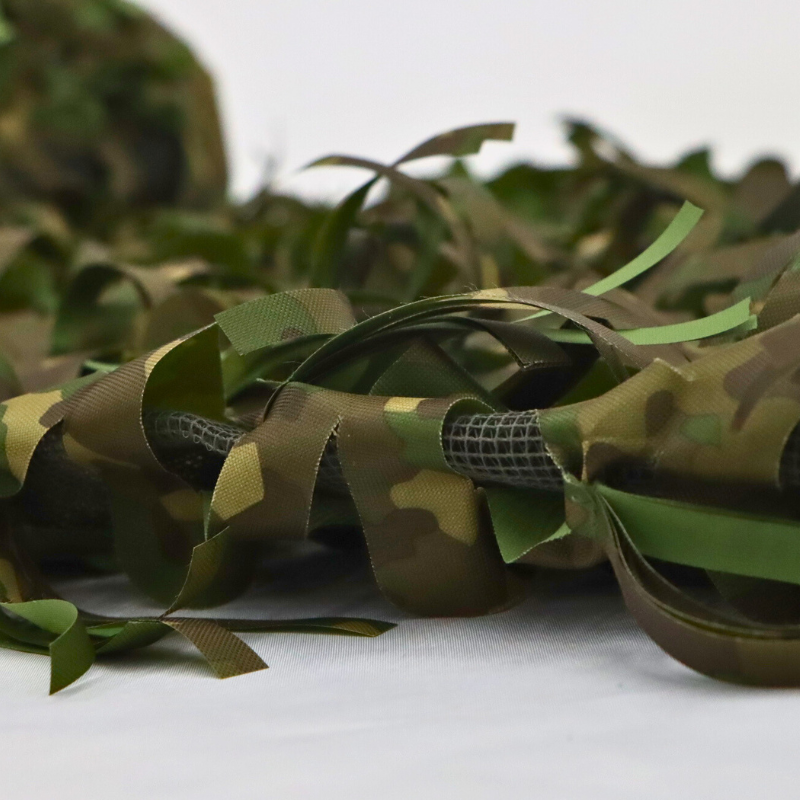
A true Military Camouflage Net goes far beyond simple visual trickery. It relies on advanced material science to defeat complex sensor networks. Engineers design these systems to manipulate specific wavelengths across the electromagnetic spectrum. Let us break down the underlying technical mechanics behind each sophisticated defense layer.
Advanced nets utilize complex 3D leaf-cut designs to defeat high-end visual sensors. These precise cuts cast natural micro-shadows across the material surface. The shadows mimic the actual depth and texture of real foliage. For Near-Infrared (NIR) threats, matching visual color alone is completely useless. Night vision goggles detect the specific reflectance values of living plant cells. Therefore, engineers apply specialized matte chemical coatings to the base fabric. These coatings mimic the precise NIR reflectance curve of local vegetation. They simulate natural chlorophyll, blending the net seamlessly into the surrounding forest or jungle environment. This prevents the fabric from appearing artificially dark or bright when viewed through NIR optics.
Defeating sensitive thermal cameras requires advanced thermal scattering and dissipation. The net cannot magically make intense heat disappear. Instead, it acts as a highly efficient thermal barrier. It physically intercepts the rising heat signature of troops, generators, or command posts. The specialized fabric diffuses this trapped heat over a much larger surface area. It blends the localized hot spots into the ambient background temperature. This thermal scattering lowers the overall temperature contrast. It prevents operators from identifying the specific geometric shape of the underlying heat source. Furthermore, the material limits solar loading during the day, keeping the covered assets cooler than the surrounding exposed ground.
To defeat synthetic aperture radar, you must deploy a specialized Radar Camouflage Net. Ordinary textiles are completely transparent to microwave energy. Engineers solve this vulnerability by integrating conductive polymers into the base fabric. They also weave microscopic metallic micro-fibers directly into the yarn structure. These materials serve a highly technical dual purpose. First, they absorb a significant portion of the incoming microwave energy, converting it into trace amounts of heat. Second, they scatter the remaining radar returns in random, unpredictable directions. This prevents the coherent radar waves from bouncing directly back to the enemy receiver. It thoroughly breaks up the hard, geometric signatures of metallic assets like tanks and artillery.
Evaluating these advanced concealment systems requires looking far beyond basic marketing claims. You must conduct a rigorous feature-to-outcome analysis. Every single design element must serve a highly specific tactical purpose on the battlefield.
You must match the structural integrity of the net directly to the target asset. Covering a static, low-profile command post differs greatly from concealing an armored troop transport. A heavy-duty Vehicle Camouflage Net requires exceptional overall tension strength. Crews often drape it directly over large metal structures like tanks or radar dishes. It must constantly withstand sharp edges, moving parts, and extreme high winds without tearing. Conversely, individual personnel covers prioritize extreme light weight and breathability over sheer tensile strength.
We constantly evaluate the critical trade-off between ruggedness and troop mobility. Mobile units carry very strict logistical payload limits. Every extra pound burdens the transport vehicle and the soldier. However, the fabric needs high tear resistance to survive the field. Manufacturers typically use advanced ripstop nylon or high-denier polyester base layers. They also apply thick chemical environmental coatings. These specific treatments provide essential anti-rot, UV resistance, and flame retardant properties. Heavy coatings drastically increase durability but add significant physical weight to the system.
Here is a transparent assumption: a net only works if deployed correctly by the operators. You cannot simply throw the fabric directly over a warm engine block. You must use specialized support poles to create an adequate air gap. We call this critical gap the standoff distance. This gap is absolutely vital for proper thermal ventilation. It allows trapped engine heat to safely escape into the atmosphere. The poles also create highly irregular shapes. This physical shape disruption is crucial for defeating both visual algorithms and radar sensors.
Feature Element | Technical Mechanism | Tactical Outcome |
|---|---|---|
3D Leaf Cut Design | Casts irregular micro-shadows | Defeats high-res visual optics |
Conductive Metal Fibers | Absorbs and scatters microwaves | Reduces Radar/SAR cross-section |
Specialized Thermal Coating | Diffuses concentrated heat sources | Blends asset into ambient temperature |
Ripstop Fabric Matrix | Prevents minor tears from spreading | Extends operational lifespan in harsh terrain |
Field deployment constantly introduces highly unpredictable variables. Pristine laboratory results do not always translate directly to muddy, high-stress combat environments. Let us closely examine the practical realities and inherent risks of deploying these systems.
Modularity & Interlocking Systems: Modern mechanized units require highly scalable concealment solutions. You might need to hide a single scout jeep today and a massive multi-tent command compound tomorrow. We strongly recommend evaluating nets that offer standardized modular sizing. They should feature rapid-connect hardware like robust polymer snaps or steel toggles. This modularity allows exhausted troops to interlock multiple nets quickly in the dark. It ensures a seamless concealment canopy without exposing dangerous straight-line seams to enemy drones.
Snag Hazards & Setup Speed: Rapid decampment is absolutely critical for unit survival under fire. Complex 3D leaf cuts naturally introduce severe snag hazards. They easily catch on communication antennas, protruding gun barrels, or sharp vehicle hardware. This causes highly dangerous delays during a rapid withdrawal operation. Planners must watch out for over-engineered cuts that hinder mobility. Unit training must emphasize careful, methodical deployment techniques. Crews must practice clearing snag points rapidly to maintain overall setup speed.
Environmental Degradation: Even the absolute best multispectral coatings degrade over time. We must transparently assess strict lifespan limitations. Continuous UV exposure eventually breaks down the chemical binders in the fabric. Thick mud masking the fabric permanently alters its carefully engineered NIR reflectance. Furthermore, continuous folding, unfolding, and stuffing mechanically degrade the fragile conductive metallic fibers. Field commanders must aggressively monitor this physical wear. They require strict replacement cycles to ensure ongoing sensor protection.
Choosing the correct concealment system is fundamentally an engineering calculation. It directly impacts mission survival rates and resource allocation. Use the following structured framework to guide your procurement strategy effectively.
You must first decide between standard commercial and true military-grade options. Standard visual and NIR COTS nets offer cost-effective solutions for low-threat environments. They work exceptionally well for basic rear-echelon logistics or domestic training exercises. However, frontline deployments face highly advanced, multi-domain threats. They demand absolute full multispectral compliance. In these critical cases, you must procure systems meeting rigorous NATO STANAG standardization agreements. These specifications guarantee baseline performance against defined radar and thermal threats.
You must avoid dangerous one-size-fits-all mentalities. You should shortlist systems based specifically on your anticipated geographical deployment zones. Arid desert environments require entirely different thermal dissipation rates than dense, humid jungles. Furthermore, snow-covered terrains demand specific UV reflectance properties. Many modern systems offer reversible colorways, such as woodland on one side and desert on the other. This dual-sided versatility maximizes operational flexibility across rapidly changing seasonal environments.
Never accept basic marketing claims at face value. You must establish strict, evidence-based criteria for vendor evaluation. Always request comprehensive technical data before authorizing any bulk procurement. You should demand independent third-party test reports. Look for highly specific radar attenuation metrics, measured in decibel (dB) loss across various frequency bands. Verify the precise thermal transmission rates under varying ambient temperatures. Finally, demand physical testing of the tensile strength to ensure the nets survive rigorous field abuse.
Effective military concealment remains a strict, unforgiving engineering calculation. It is never merely an aesthetic design choice. We must carefully balance the exact enemy sensor threats against our real operational constraints. Payload weight limits, rapid deployment speed, and strict material budgets all influence the final procurement decision.
Consider taking these precise, action-oriented next steps:
Audit your current concealment inventory immediately to identify critical capability gaps against modern threats.
Map your expected adversary sensor profiles directly against your primary geographical deployment zones.
Consult with a dedicated tactical concealment specialist to thoroughly review your unit's standoff distance protocols.
Take decisive action today to upgrade your overall force protection. Outdated, legacy materials leave your high-value assets highly vulnerable to modern detection. Secure the right multispectral defenses to ensure total operational dominance.
A: No. It diffuses and dissipates the heat to break up the recognizable shape of the vehicle, lowering the contrast between the vehicle and the background. It mitigates detection range but does not erase the thermal output of an active engine block.
A: Hunting nets primarily provide visual concealment and sometimes basic UV/NIR treatment. Radar nets contain specialized metallic or conductive yarns woven into the fabric to absorb and scatter microwave frequencies.
A: Lifespan depends on usage, but continuous exposure to severe UV, moisture, and mechanical abrasion will eventually degrade the specialized coatings. Routine testing and replacement schedules (typically 3-5 years for active field use) are recommended.


