
Views: 0 Author: Site Editor Publish Time: 2025-12-27 Origin: Site


In modern law enforcement and security operations, having the right equipment is crucial for officer safety and effective crowd management. Antiriot shields play a central role in protecting personnel from thrown objects, blunt-force attacks, and other non-ballistic threats. From classic rectangular designs to advanced anti-laser models, these shields provide versatility, visibility, and durability in unpredictable situations. Understanding the different types of antiriot shield for police and security helps teams choose the right tools for any operation, ensuring both protection and operational efficiency.
Antiriot shields are designed to provide both protection and tactical advantage during crowd-control situations. They work by absorbing and deflecting the energy from thrown objects, blunt strikes, or other non-ballistic threats, causing these hazards to bounce away rather than hit the officer directly. The shields’ transparent surfaces allow officers to monitor the crowd, anticipate movements, and react quickly to potential dangers, improving overall situational awareness.
Beyond individual protection, antiriot shields support coordinated team tactics. Officers can advance while maintaining a defensive line, hold positions against aggressive crowds, or push back groups in a controlled manner. Interlocking shields enhance this effect, allowing multiple officers to create a continuous barrier that is harder for rioters to penetrate. By combining impact resistance, clear visibility, and tactical functionality, antiriot shields remain an essential tool for law enforcement and security personnel operating in volatile environments.
Polycarbonate is the most common material used in modern antiriot shields. It is transparent, lightweight, and highly impact resistant. Typical thickness ranges from 4–6 mm, offering a balance between protection and maneuverability.
Aluminum antiriot shields offer better resistance to heat and fire. They are often chosen for environments where incendiary threats may appear. Visibility is limited, and a small viewport usually replaces full transparency.
Some antiriot shields combine plastics, metals, or special coatings. These hybrid designs aim to improve durability or resist specific threats. They usually cost more and are intended for specialized operations.
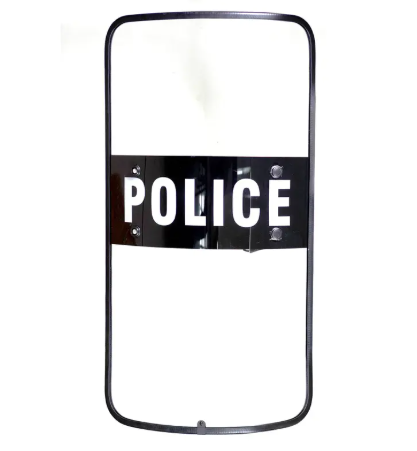
Classic rectangular antiriot shields are the most widely used option among police and security forces worldwide. They usually provide half-body or full-body coverage, protecting the officer from the head or shoulders down to the knees. This makes them well suited for standard riot control, patrol support, and crowd management operations. Officers often pair these shields with batons, allowing one arm to remain free for controlled defensive or pushing movements during formations.
Lightweight yet impact-resistant construction for extended use
Clear polycarbonate surface for full visibility of crowd movement
Simple handle and strap system that allows quick deployment and control
Interlocking antiriot shields are designed for team-based operations where maintaining a solid line is critical. The edges of each shield are shaped to connect with adjacent shields, forming a continuous barrier. This structure helps law enforcement units hold ground and prevent crowds from forcing their way through police lines. These shields are especially effective during large demonstrations, riots, and perimeter defense situations where coordinated movement and stability are required.
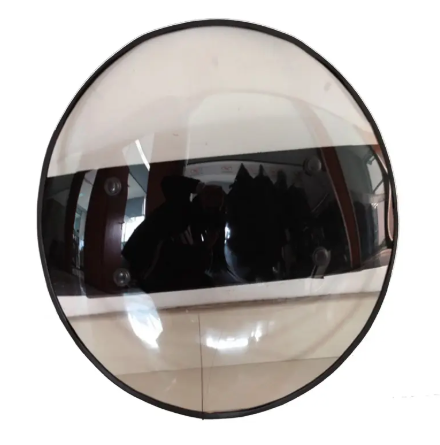
Round antiriot shields are smaller, lighter, and easier to maneuver than rectangular models. They are commonly used in close-contact situations, narrow streets, stairwells, or indoor environments. Officers can quickly reposition the shield to respond to threats from different directions. While they offer less body coverage, their agility makes them useful for rapid response and mobile crowd control tasks.
Laser interference has become a growing concern during modern protests, as high-powered lasers can temporarily blind or disorient officers. Anti-laser antiriot shields incorporate special filtering layers or films that reduce the impact of common laser wavelengths. Although these shields allow less light to pass through compared to standard clear shields, they still provide sufficient visibility for situational awareness while protecting the officer’s eyesight.
Fire-resistant antiriot shields are designed for environments where incendiary threats may occur, such as Molotov cocktails or burning debris. Aluminum construction improves resistance to heat and flames, offering added protection in high-risk riot scenarios. However, these shields are generally heavier and provide limited visibility through small viewports. They are not ballistic-rated and are intended only for non-ballistic threats.
| Antiriot Shield Type | Main Characteristics | Typical Use | Key Trade-Off |
|---|---|---|---|
| Classic Rectangular | Transparent polycarbonate, half or full-body coverage | Standard riot control, patrol, formations | Limited fire and ballistic resistance |
| Interlocking | Connectable edges form a solid shield wall | Large protests, perimeter defense | Reduced individual mobility |
| Round (Circular) | Compact, lightweight, one-handed use | Close-contact, indoor or narrow spaces | Less body coverage |
| Anti-Laser | Laser-filtering layer reduces visual disruption | Protests with laser threats | Lower light transmission |
| Fire-Resistant / Aluminum | Aluminum body resists heat and flames | Incendiary-threat environments | Heavier, limited visibility |
Antiriot shields protect users from a wide range of non-ballistic threats commonly encountered during riots and disturbances.
Rocks and bricks
Glass bottles
Metal fragments
Sticks and clubs
Rubber bullets
Water cannons
Electric shock devices
Laser pointers
Crowds often use whatever objects are nearby, and antiriot shields create a safe buffer between officers and these hazards.
| Feature | Antiriot Shield | Ballistic Shield |
|---|---|---|
| Primary threat | Blunt force, projectiles | Bullets, fragments |
| Material | Polycarbonate, aluminum | Steel, PE, ceramics |
| Weight | Light | Heavy |
| Visibility | High | Limited viewport |
| Typical use | Crowd control | Tactical entry |
Choosing the correct shield type is essential for officer safety.
Antiriot shields are primarily designed for non-ballistic crowd control and therefore follow general safety, durability, and manufacturing standards rather than formal ballistic certification systems. Unlike ballistic shields, they are not rated to stop live ammunition, which makes proper specification and testing especially important during procurement.
Most antiriot shields are evaluated for impact resistance, shatter resistance, and edge safety. Manufacturers typically test shields to ensure they can withstand repeated strikes from blunt objects without cracking or producing sharp fragments. Handle systems, straps, and padding are also assessed to reduce fatigue and prevent user injury during prolonged operations.
Procurement teams should verify material quality, thickness consistency, and transparency levels before selection. It is also important to confirm that manufacturing processes are consistent across production batches, especially for shields used in large formations. Custom features such as inscriptions, coatings, or accessories should meet the same safety standards as the shield body itself.
As public-order challenges continue to change, antiriot shield design is evolving to improve protection, comfort, and operational efficiency. Modern shields are becoming more specialized while remaining lightweight and easy to deploy.
Manufacturers are developing lighter composite materials that maintain impact resistance while reducing officer fatigue. Improved anti-laser coatings and surface treatments are also becoming more common, helping protect vision without significantly reducing visibility.
Future designs place greater emphasis on ergonomics. Better handle angles, improved padding, and weight distribution help officers maintain control during long deployments. These improvements reduce strain and increase overall effectiveness in crowd control situations.
Antiriot shields are increasingly designed to work with accessories such as tactical lights, identification markings, and communication aids. This integration allows officers to adapt shields to different operational environments without compromising mobility or safety.
Polycarbonate is the most common choice because it balances visibility, impact resistance, and manageable weight.
They are chosen in environments where fire or extreme heat may appear, such as riots involving incendiary devices.
They allow teams to form a continuous barrier, helping hold lines and control large crowds more effectively.
They reduce the effect of common laser wavelengths but do not eliminate every possible laser threat.
Usage time depends on weight, ergonomics, and training, but modern designs aim to reduce fatigue during long deployments.
As public-order challenges evolve, antiriot shields remain a key component of law enforcement and security strategies. Modern shields, including interlocking, round, anti-laser, and fire-resistant designs, offer tailored solutions for diverse threats while prioritizing visibility and officer mobility. For organizations seeking high-quality, reliable antiriot shields, Jiangsu Ultra Safe New Material Co., Ltd. provides a comprehensive range of products engineered for durability, safety, and performance in all types of security and crowd-control operations.


