
Views: 0 Author: Site Editor Publish Time: 2025-12-25 Origin: Site


An Antiriot Shield is one of the most recognizable and essential tools used in modern crowd control. As public gatherings grow larger and social tensions become more complex, law enforcement and security teams need equipment that protects without escalating force. That is where the antiriot shield plays a critical role.
An antiriot shield is a handheld defensive device used during civil unrest and crowd control situations. It exists to protect people on the front line when conditions become unpredictable. Unlike historical combat shields, it serves public safety, not battlefield combat.
An antiriot shield is designed to create a mobile barrier between the user and incoming danger. It allows officers to move, hold ground, and respond while staying protected. They use it to manage crowds, block threats, and regain control of unstable scenes.
Primary threats antiriot shields protect against include:
Thrown objects like rocks, bricks, bottles, and debris
Blunt-force strikes from sticks, batons, or improvised weapons
Physical contact such as pushing, punching, and kicking
Bodily fluids, including saliva and other hazardous liquids
Antiriot shields differ from general protective shields in purpose and construction. General shields focus on training or static defense. Antiriot shields focus on movement, visibility, and real-world crowd dynamics. They are lighter, shaped to deflect impact, and built for long deployments.
Transparency plays a critical role in antiriot shield design. Clear polycarbonate lets users see threats before impact. It helps them read crowd behavior and react faster. Opaque shields remove awareness and increase risk.
| Feature | Antiriot Shield | General Protective Shield |
|---|---|---|
| Visibility | Transparent | Often opaque |
| Mobility | High | Limited |
| Crowd Control Use | Yes | Rare |
| Impact Deflection | Designed for it | Minimal |
Antiriot shields are used by trained professionals operating in high-risk public environments. They appear anywhere crowds, tension, and unpredictable behavior overlap.
Common users include:
Law enforcement agencies during protests and disturbances
Riot police and dedicated crowd control units
Correctional officers handling inmate extractions or riots
Military units assigned to non-combat security roles
Private security teams managing large events or venues
Each group uses antiriot shields differently. Police focus on formation control. Corrections teams use them for close-contact restraint. Event security relies on them for short, intense incidents.No matter the user, the goal stays the same. They protect people while restoring order.
Antiriot shields are engineered to balance protection, mobility, and visibility during unpredictable crowd-control situations. Every design decision affects how the shield performs in motion, how long an officer can use it, and how well threats are managed in real time. Materials, shape, ergonomics, and visibility all work together to support control in high-pressure environments.
Most antiriot shields are built from polycarbonate, which has become the industry standard for modern crowd-control equipment. It offers strong impact resistance while remaining significantly lighter than metal, making it suitable for extended deployments. We favor polycarbonate because it flexes under stress instead of shattering, reducing the risk of secondary injuries. Polycarbonate performs well against blunt-force impacts, maintains clarity after repeated strikes, and provides safer failure behavior when stressed beyond its limits. These properties make it ideal for unpredictable riot conditions where objects of all kinds may be thrown.
Antiriot shields typically range from 2 mm to 8 mm in thickness. Most law enforcement agencies rely on 4–6 mm shields, which provide a practical balance between protection and mobility. Thicker shields absorb more force, though they also add weight and can increase fatigue over time. Polycarbonate also offers flame-resistant qualities. It does not ignite easily and helps slow flame spread, which becomes critical when facing incendiary devices or burning debris.
| Thickness | Protection Level | Mobility Impact |
|---|---|---|
| 2–3 mm | Light threats | High |
| 4–6 mm | Standard riot use | Balanced |
| 7–8 mm | Heavy impact | Reduced |
Shield size directly affects how much of the body remains protected during engagement. Full-size antiriot shields typically cover the user from head to knees, while smaller models focus on protecting the torso and face when speed and flexibility matter more. Common dimensions include 24 × 36 inches for higher mobility and 24 × 48 inches for maximum frontal coverage. Larger shields provide better protection but require more strength and coordination during use.
Rectangular antiriot shields are the most common choice for crowd control operations because they align easily during formation movement. They allow officers to form consistent shield walls without gaps. Round shields offer greater maneuverability and are better suited for confined spaces or rapidly shifting situations. Shield curvature also influences how force is managed. Convex shields curve inward toward the user and help deflect projectiles away from the body. Concave shields curve outward and are often used during close-contact scenarios, where pinning or restraining individuals becomes the priority.
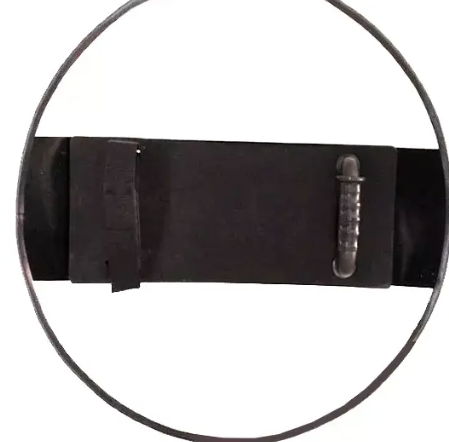
Ergonomics play a major role in how long a shield can be used effectively. Poor grip design leads to faster fatigue and reduced control, especially during prolonged unrest. Most antiriot shields feature adjustable forearm straps, padded arm rests, and reinforced hand grips to stabilize the shield against the arm. These features help distribute weight evenly and reduce strain on the wrist and shoulder.
One-handed shields allow the user to operate other tools using the free hand, making them well suited for baton use or chemical agents. Two-handed shields provide greater stability and are often preferred during static defense or high-pressure pushes where maximum control is required. Balanced weight distribution remains critical. When a shield sits naturally on the arm, officers can maintain effectiveness longer and react more precisely as conditions evolve.
Clear visibility defines modern antiriot shield design. Transparency allows constant awareness of crowd behavior, movement patterns, and incoming threats. It helps users track thrown objects earlier and respond more quickly.
Clear antiriot shields reduce blind spots, improve threat recognition, and support faster reaction times in chaotic environments. Opaque designs restrict perception and increase risk, especially when conditions change rapidly. Transparent polycarbonate keeps vision open while maintaining essential protection.
Antiriot shields are active tools, not static barriers. They move, block, push, and protect during fast-changing events. Proper use depends on training, teamwork, and situational awareness.
Proper antiriot shield use begins with stance and posture. Officers maintain a stable position with feet set shoulder-width apart and knees slightly bent. This posture improves balance, absorbs impact, and allows for quick directional changes when pressure increases.
The shield is held close to the body rather than extended outward. Keeping the shield tight improves leverage and reduces strain on the arms and shoulders. A slight inward angle helps deflect thrown objects downward or away from the user instead of absorbing direct impact. Grip control is equally important. Hands should remain firm but relaxed to avoid unnecessary fatigue. During prolonged operations, officers frequently adjust hand position and rotate shield roles within the team to maintain strength and responsiveness. Core handling principles include keeping elbows tucked, avoiding locked wrists, maintaining clear forward vision, and continuously adjusting positioning as threats evolve.
Key handling basics include:
Keep elbows tucked in
Avoid locking the wrist
Maintain forward vision
Adjust position as threats change
Antiriot shields are most effective when deployed as part of a coordinated formation. The shield wall remains the most common crowd control tactic, with officers aligning shields edge to edge to form a continuous protective barrier. This formation blocks projectiles, controls space, and allows teams to advance safely.
Movement during crowd control must be controlled and deliberate. Officers advance in short, synchronized steps to maintain alignment and avoid gaps that could be exploited by the crowd. Sudden movements or uneven pacing increase the risk of loss of formation integrity.
| Tactic | Purpose | Risk Level |
|---|---|---|
| Shield wall | Area control | Low |
| Forward push | Crowd movement | Medium |
| Static hold | Perimeter defense | Low |
Close-contact scenarios require a shift in shield usage. When distance disappears, the focus moves from area protection to individual control. Shields are used to apply steady pressure, guide movement, and limit an individual’s ability to resist.
Concave antiriot shield designs are particularly effective in close-contact situations. Their shape allows officers to pin individuals against walls or the ground while maintaining control and balance. These operations rely heavily on teamwork, with one officer managing shield positioning while another applies restraints.
Although batons and other non-lethal tools remain available, they function as supporting equipment rather than primary tools. The shield remains the main point of contact, helping minimize injury risks for both officers and civilians.
Antiriot shields rarely operate alone during real-world deployments. Instead, they anchor larger crowd-control systems by providing frontline protection while other officers deploy additional equipment.
Shields commonly work alongside batons, pepper spray, and tasers to manage spacing, compliance, and targeted restraint. They also provide critical cover during the deployment of distance-based tools such as water cannons, rubber projectiles, and chemical agents.
Common equipment used alongside shields:
Batons for leverage and spacing
Pepper spray for compliance
Tasers for targeted restraint
Antiriot shields are used across many real-life environments, not only during major riots. Their role changes depending on crowd size, threat intensity, and how long an operation lasts. In practice, teams adjust shield tactics to match space limitations, emotional pressure, and evolving risks while keeping control and safety as priorities.
Large-scale protests and political unrest often involve unpredictable crowd behavior and rapidly shifting conditions. As demonstrations grow, routes may become blocked and tension can rise quickly. In these situations, antiriot shields provide essential frontline protection against thrown objects such as bottles, stones, or fireworks, allowing officers to maintain position without immediately escalating force.
During long-duration crowd control operations, shields also help manage fatigue and sustained pressure. Officers rotate positions to reduce strain, while shield formations alternate between static holding lines and slow, controlled advances. This flexibility helps maintain order while limiting unnecessary confrontation.
Typical shield roles during protests include:
Absorbing repeated projectile impacts
Establishing buffer zones between groups
Directing crowds away from restricted or sensitive areas
Sporting events, concerts, and festivals present a different type of challenge. Crowds remain dense, emotions run high, and incidents often happen suddenly rather than building over time. Antiriot shields are used for rapid response when aggression flares, protecting officers from short-term projectile threats like drinks, debris, or loose objects.
In these environments, mobility becomes more important than full-body coverage. Lighter shields allow officers to move quickly through narrow aisles or packed areas, isolate disruptive individuals, and restore order before situations spread.
| Event Type | Primary Shield Use | Typical Duration |
|---|---|---|
| Sports matches | Rapid intervention | Short |
| Concerts | Crowd separation | Short |
| Festivals | Perimeter control | Medium |
Correctional facilities require close-contact shield use in confined spaces. During prison disturbances or riots, antiriot shields protect staff from improvised weapons and coordinated inmate movement. Shield lines allow officers to advance safely through corridors and housing units while maintaining control.
Cell extractions rely heavily on shield technique. Concave shield designs help pin individuals against walls or fixtures, limiting movement while restraints are applied. One officer controls the shield while others coordinate handcuffing or compliance tools, keeping the shield as the primary protective barrier.
After violent incidents, confusion and panic often remain even after the immediate threat ends. Antiriot shields help secure affected areas, block access to hazards, and protect responders working behind the line. Clear shields remain especially valuable in low-light or damaged environments, preserving situational awareness.
During evacuations, shields are used to guide rather than confront crowds. They help form safe corridors through debris or damaged infrastructure, protecting medical teams and emergency personnel as people move to safety.
Common post-incident shield applications include:
Isolating dangerous areas
Redirecting crowd movement
Providing cover during rescue and medical operations
An antiriot shield is used to protect frontline personnel during crowd control situations. It helps block thrown objects, absorb impact, manage physical contact, and maintain controlled movement during protests, riots, or disturbances.
No, standard antiriot shields are not bulletproof. They are designed to stop blunt-force impacts and thrown debris, not live ammunition. Bullet-resistant shields use different materials and construction.
Transparency allows officers to see crowd behavior, detect threats early, and react faster. Clear shields improve situational awareness and reduce blind spots during chaotic or fast-moving incidents.
Most modern antiriot shields are made from polycarbonate. This material offers strong impact resistance, flexibility under stress, and relatively low weight compared to metal alternatives.
As threats evolve, so does shield technology. Choosing the right antiriot shield means focusing on material quality, ergonomic design, and operational reliability. Jiangsu Ultra Safe New Material Co.,Ltd. specializes in advanced protective materials and manufacturing solutions, supporting the development of high-performance antiriot shields that meet the demands of modern security operations. By combining innovation, durability, and practical design, the company helps equip professionals with tools they can trust when safety matters most.


