
Views: 0 Author: Site Editor Publish Time: 2026-07-28 Origin: Site


Every day, security professionals, law enforcement officers, and responsible citizens step into high-risk environments. They trust their life-saving gear to stop lethal ballistic threats. Yet, many buyers rely on flashy marketing claims rather than verified threat matrices. This oversight introduces severe liability and catastrophic safety risks. Buying unverified equipment puts lives directly on the line. Without a firm grasp of underlying ballistic science, you risk wearing gear too weak to stop a bullet or too heavy to allow free physical movement during a crisis.
The National Institute of Justice (NIJ) standard remains the only globally recognized framework evaluating ballistic performance. It effectively cuts through the industry marketing noise. This article provides a pragmatic, evidence-based framework. It helps you decode complex NIJ ratings confidently. You will learn how to navigate tricky weight-to-protection trade-offs. Most importantly, we will show you how to match specific ballistic profiles directly to your daily operational realities.
Threat level drives product selection: Handgun threats require soft armor (up to Level IIIA); rifle threats require a hard ballistic plate (Level III and above).
Higher protection equals higher physical burden: Scaling up from Level IIIA to Level IV significantly limits mobility and increases fatigue.
"NIJ Tested" is not "NIJ Certified": Only products listed on the NIJ Compliant Product List (CPL) carry verified, audited authoritative status.
The upcoming NIJ 0101.07 standard will replace Roman numerals with HG (Handgun) and RF (Rifle) designations, altering how future inventory is evaluated.
Proper evaluation starts with defining the exact standard. The current NIJ 0101.06 standard measures several critical failure points using highly controlled laboratory conditions. First, it tests for direct ballistic penetration. Second, it measures backface deformation, also known as Backface Signature (BFS). BFS represents the blunt force trauma transferred directly into the human body. During testing, technicians place the armor over a specialized clay backing. The NIJ mandates this clay indentation cannot exceed 44 millimeters. Exceeding this limit means the wearer might survive the bullet but succumb to severe internal organ damage. Furthermore, the standard rigorously evaluates multi-hit durability and extreme environmental endurance.
Future inventory will soon shift to the newly published NIJ 0101.07 standard. This modernized framework introduces tighter testing velocities and updated terminology. It replaces outdated roman numerals with straightforward, threat-specific labels.
You must watch out for the "tested to" trap. Many private companies claim their products are "tested to NIJ standards." This phrase is a massive red flag for consumers. It often implies a manufacturer simply shot their own panel once in an unregulated, private setting. It completely lacks ongoing quality audits. True NIJ Certification requires independent, third-party laboratory testing. Certified products undergo harsh environmental conditioning. They sit in tumbling chambers, face extreme heat, and endure high humidity before bullets ever fly. Furthermore, certified factories undergo routine batch inspections. Only products listed on the official NIJ Compliant Product List (CPL) carry verified authoritative status.
Institutional procurement teams and private citizens alike must prioritize this CPL validation. Demanding independent verification mitigates extreme liability risk. Without it, you gamble on inconsistent manufacturing quality. Reliable Body Armour must deliver predictable, identical performance during every single deployment.
You must firmly categorize your operational needs before selecting a protection tier. Protective gear generally falls into two distinct categories: soft fabric and hard plate systems.
Soft solutions utilize advanced, tightly woven fabrics. Manufacturers heavily rely on proven materials like Kevlar, Dyneema, and Spectra. These synthetic aramid and polyethylene fibers catch a bullet much like a net catches a tennis ball. They rapidly absorb and disperse the intense kinetic energy across the entire panel. Soft solutions are highly flexible and yield to natural body movement. You can wear them constantly throughout a grueling twelve-hour shift without severe joint pain.
This category represents the ideal setup for a standard NIJ Bulletproof Vest. Such vests protect wearers against common handgun rounds and severe blunt trauma attacks. Patrol officers, VIP protection agents, and private security personnel wear these soft vests discreetly under their uniform shirts. They offer excellent mobility and maximum concealability in public settings.
High-velocity rifle rounds easily pierce soft woven fibers. You need highly rigid materials to physically shatter or abruptly stop a rifle bullet. This category utilizes advanced Ceramic, Ultra-High-Molecular-Weight Polyethylene (UHMWPE), and hardened Steel. These rigid materials form thick, unyielding panels.
Rigid panels are significantly heavier than their soft counterparts. Users wear them externally inside dedicated tactical plate carriers. You typically deploy a Hard Ballistic Plate during active shooter responses or high-intensity military operations. Specialized high-threat security details also require this maximum protection tier. With rigid plates, you consciously trade physical comfort for ultimate survivability against high-velocity rifle platforms.
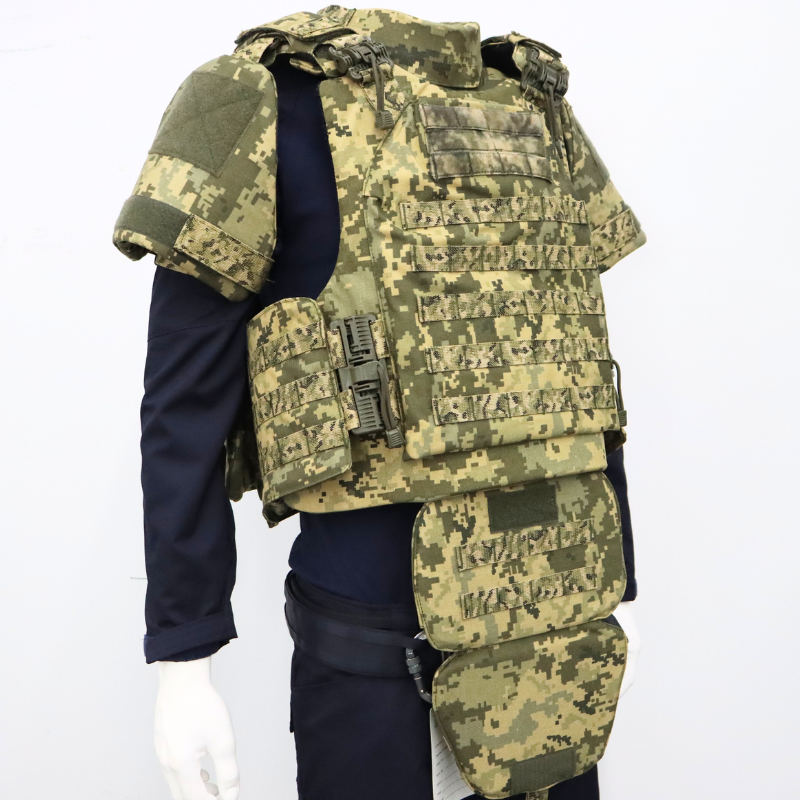
Handgun violence represents the most statistically common ballistic threat in urban and civilian environments. You must understand how soft ratings differ to choose the right daily defense.
Level IIA represents the lightest official protection available today. It safely stops 9mm and .40 S&W rounds fired from short pistol barrels. Level II scales up the defense slightly. It stops higher-velocity 9mm ammunition and standard .357 Magnum rounds. Both of these options remain extremely lightweight and highly concealable under light summer clothing.
However, they involve significant tactical trade-offs. Modern duty environments feature increasingly powerful, fast-moving ammunition. High-velocity rounds fired from longer barrels easily defeat these lower tiers. Consequently, Level IIA and Level II are largely obsolete for primary duty use today. Undercover officers might wear them for absolute maximum concealment during clandestine operations, but most security professionals avoid them entirely.
Level IIIA serves as the current gold standard for daily patrol wear. It effectively stops potent handgun rounds like the .357 SIG and the heavy .44 Magnum. It also successfully defeats 9mm submachine gun fire.
This specific rating provides the most versatile balance of maximum protection and manageable weight. It represents the absolute maximum threshold for concealable soft panels before the material becomes too stiff. You get comprehensive handgun defense without sacrificing vital daily comfort or driving mobility. For this exact reason, nearly all major police departments mandate Level IIIA for standard uniform use.
When facing aggressive rifle threats, soft fabric completely fails. You must transition to rigid plate systems. The scaling process introduces complex variables regarding weight limits and material science.
A verified Level III Armour insert safely stops standard rifle fire. The NIJ specifically tests this rating using 7.62x51mm NATO (M80 ball) ammunition. These are standard, non-armor-piercing rounds. Pure UHMWPE (polyethylene) plates shine brightly in this category. They weigh exceptionally little—often landing under three pounds per plate. They literally float in water and drastically minimize user fatigue during long tactical movements.
However, pure polyethylene carries a highly critical vulnerability. It severely struggles against fast, steel-tipped ammunition. The incredibly popular 5.56mm M855 "Green Tip" round easily pierces pure poly Level III systems through sheer velocity and steel core tip penetration.
You will frequently encounter the term "Level III+" while shopping for hard panels. You must exercise extreme caution here. "III+" is definitely not an official NIJ 0101.06 rating. The NIJ does not officially recognize, test, or certify any "plus" categories.
It is strictly a clever industry marketing term. It indicates a plate surpasses standard Level III testing but ultimately falls short of Level IV requirements. Usually, manufacturers use III+ to signify a plate stops the 5.56mm M855 Green Tip or the popular 7.62x39mm Mild Steel Core (AK-47 round). Because definitions vary wildly between different manufacturers, extreme buyer skepticism is mandatory. Always demand and read the exact specific threat testing reports. Verify precisely which rounds the independent lab tested against the panel before trusting it with your life.
Level IV represents the highest official protective tier. It safely stops .30 caliber armor-piercing (AP) rounds. The standard dictates it must defeat the devastating .30-06 M2 AP round. Ceramic materials combined with strong composite backing layers utterly dominate this category.
This ultimate protection tier carries a severe physical implementation risk. Level IV units are extremely heavy and bulky. They often weigh between 7 and 10 pounds per individual plate. Wearing two plates, a carrier, a radio, and loaded magazines crushes human stamina rapidly. It severely impacts joint mobility during extended deployments or foot pursuits. You should reserve Level IV strictly for known high-threat, armor-piercing environments where mobility takes a back seat to absolute stopping power.
Selecting the best gear involves far more than just picking a ballistic threat level. Ergonomics, product longevity, and secondary material behavior dictate how the equipment actually performs in the real world.
In the fast-paced tactical space, ounces equal pounds, and pounds equal pain. An over-specced Level IV loadout might seem much safer on a spreadsheet. In actual reality, it severely degrades user performance. Carrying twenty extra pounds of rigid ceramic destroys stamina quickly. It ruins overall situational awareness far faster than the threat environment itself. Scalability matters immensely. You should only wear the specific weight you absolutely need for the anticipated threat profile.
Plate shape directly dictates your physical comfort and proper weapon manipulation. A standard "Shooter's Cut" removes severe corners near the top shoulders. This aggressive angle allows you to shoulder a rifle properly and punch forward without pinching. A "SAPI Cut" provides slightly more lung coverage but restricts forward arm movement slightly.
Curvature is equally vital for daily wearability. Single-curve plates sit totally flat against the chest. They often feel highly unnatural and restrict deep breathing. Multi-curve panels actively wrap around the human torso's natural shape. Multi-curve designs drastically improve ergonomics and distribute weight evenly, though they naturally increase the manufacturing cost.
When a copper-jacketed bullet strikes hard bare steel, it immediately shatters upon impact. This resulting fragmentation—commonly called spall—shoots violently outward across the plate's flat surface. High-velocity spall easily cuts into the wearer's exposed neck, chin, or inner arms. Steel plates absolutely require heavy, specialized anti-spall coatings to trap these deadly fragments. If that thick coating fails or tears, the safety risk is deadly. Conversely, ceramic and polyethylene composite alternatives absorb and trap the bullet internally. They neutralize the violent spall risk entirely.
No protective equipment lasts forever. Standard ballistic warranties typically cover exactly five years. This specific timeline relates directly to material degradation, not a random, arbitrary expiration date. Ambient heat, deep moisture, and ultraviolet (UV) exposure slowly break down synthetic fibers and composite adhesives over time. Leaving soft panels in a baking hot car trunk actively accelerates this chemical decay. Regular physical inspection and strict replacement schedules are completely mandatory for mitigating institutional liability.
Threat Level | Armor Type | Primary Material | Defeats (Examples) | Flexibility |
|---|---|---|---|---|
Level IIA / II | Soft | Kevlar, Aramid | 9mm, .40 S&W, .357 Mag | High |
Level IIIA | Soft | Dyneema, Kevlar | .44 Magnum, .357 SIG | High |
Level III | Hard | UHMWPE, Ceramic | 7.62x51mm (M80 Ball) | Rigid |
Level IV | Hard | Ceramic Composite | .30-06 M2 AP | Rigid |
Navigating the commercial market feels entirely overwhelming without a structured approach. Follow these four chronological steps to make a highly logical, evidence-based final selection.
Step 1: Threat Assessment: Define the most statistically likely threat in your specific deployment environment. Urban civilian and patrol environments primarily face handguns. Rural, SWAT, or military environments face high-velocity rifles. Buy for the rule, not the extreme exception.
Step 2: Time-in-Gear Analysis: Evaluate exactly how long you will wear the equipment per shift. If you wear it for 8 to 12 hours daily, prioritize lighter weight. A Level IIIA setup or high-end Polyethylene Level III works best. If you wear it strictly for 30-minute emergency responses, weight becomes secondary. Maximum protection like a Ceramic Level IV takes priority.
Step 3: Verification: Never trust a product page blindly. Cross-reference the exact specific model number with the NIJ Compliant Product List online. If it does not appear on the active database, do not buy it for professional duty.
Step 4: Carrier Integration: Ensure the selected panels integrate correctly with your existing gear. Check compatibility with duty belts, concealable uniform shirts, or external tactical MOLLE carriers. Mismatched gear causes chafing and restricts vital movement.
Protective equipment is fundamentally life-saving gear. It is simply never an appropriate place to compromise on unverified standards, vague marketing, or cheap materials. Understanding the distinct differences between handgun and high-velocity rifle protection deeply empowers you as a consumer. It ensures you select equipment directly tailored to your exact operational reality. You can carefully balance critical protection thresholds against the inevitable physical fatigue of heavy loadouts.
Your immediate next steps require highly practical evaluation. Audit your current or prospective threat environment objectively and honestly. Establish a firm, realistic budget before browsing. Ensure your budget explicitly includes high-quality, durable carriers, not just the raw ballistic inserts. Finally, always consult the active NIJ CPL database before initiating any formal purchase. Your ultimate preparedness relies on verified testing data, not aggressive marketing hype.
A: The incoming NIJ 0101.07 standard modernizes terminology and testing protocols. It replaces Roman numerals with HG1/HG2 for Handgun threats and RF1/RF2/RF3 for Rifle threats. The new standard introduces stricter test velocities. It also incorporates specific testing against modern threats like the 5.56mm M855 round, which older standards ignored entirely.
A: No. Soft materials easily stop handguns but fail against the extreme velocity of a rifle bullet. Even if the fabric managed to catch the projectile, the backface deformation would transfer lethal blunt force trauma directly into the wearer's internal organs. You absolutely need rigid plates to shatter rifle rounds.
A: Yes, they degrade over time. The typical five-year timeframe is a warranty lifespan regarding material stability. Moisture, UV light, and thermal cycling silently degrade composite adhesives and synthetic fibers. Wearing expired gear introduces massive institutional liability. Agencies must cycle out old equipment to ensure guaranteed ballistic performance.
A: ICW indicates a specific plate design that cannot stop its rated threat alone. You must wear an ICW plate directly over a Level IIIA soft vest to achieve the stated rifle rating. This differs entirely from "Standalone" plates, which require no soft backing whatsoever to defeat their rated ballistic threats.


