
Views: 0 Author: Site Editor Publish Time: 2026-07-25 Origin: Site


Procuring protective gear in large volumes carries immense responsibility. Agencies, private security firms, and military units face extremely high stakes. A single equipment failure compromises human lives. Procurement officers face a tough challenge daily. You must balance strict budget limits against uncompromising safety standards. Wearers also need maximum mobility alongside strict regulatory compliance. How do you find the right balance? This article provides a highly structured evaluation framework. We help you objectively assess vendors and evaluate material science. You will discover exactly how to approach your next bulk order with confidence. We explain everything from threat levels to precise fitment strategies. Making poor choices leads to severe field consequences. Relying on this guide ensures your team stays fully protected.
Procurement success depends on matching National Institute of Justice (NIJ) threat levels directly to specific operational environments.
Total Cost of Ownership (TCO) extends beyond unit price; shelf life, warranty terms, and carrier durability heavily dictate true budget impact.
Sizing and fitment for a diverse workforce are the highest implementation risks in volume orders.
Vetting vendor production capacity, quality control transparency, and offering Test & Evaluation (T&E) samples are mandatory steps before signing a contract.
Every successful bulk purchase begins by evaluating the core mission. Standard patrol units experience completely different daily realities than high-risk tactical teams. Defining these baseline criteria protects your personnel.
You must analyze the exact environment of your operators. Urban patrol officers spend countless hours sitting inside squad cars. They need shorter front panels. Long panels push up into the throat during seated periods. Tactical response units move dynamically through confined spaces. They require maximum side coverage. Rural operators face extreme weather conditions. They need highly breathable configurations. Identify these daily physical demands before reviewing vendor catalogs. Documenting these facts creates a reliable purchasing foundation.
We rely on the National Institute of Justice (NIJ) to classify ballistic resistance. Agencies commonly reference the NIJ 0101.06 standard today. However, the industry is transitioning to the newer NIJ 0101.07 standard. You must understand this regulatory shift. It directly impacts your long-term compliance. Soft armour handles handgun threats. These flexible panels stop common street calibers like 9mm and .44 Magnum. They fall under traditional Levels II and IIIA. They work best for daily patrol officers. Hard armour stops high-velocity rifle rounds like 5.56mm and 7.62mm. These rigid plates classify as Levels III and IV. High-threat response teams require these advanced plates. Always match the NIJ level directly to your actual threat landscape.
Procurement officers sometimes purchase the highest protection level available. This approach creates significant operational problems. A severe weight penalty exists in ballistic gear. Over-specifying the threat level adds unnecessary bulk. Extra weight heavily restricts user mobility. It also increases physical fatigue during twelve-hour shifts. Fatigued officers often remove their gear entirely. Lower compliance in the field directly reduces your overall safety metrics. Protect against realistic threats rather than unlikely worst-case scenarios. A lighter vest worn consistently saves more lives than a heavy vest left in the trunk.
Carriers hold the ballistic panels securely in place. They determine how the entire system interacts with the human body. Selecting the right carrier system requires careful evaluation.
Concealable carriers go directly under the uniform shirt. Undercover operators and detectives rely heavily on them. Overt carriers go over the uniform. Uniformed patrol officers increasingly prefer overt options. They allow for quick donning and doffing during shift changes. Map the specific carrier type directly to the operational role. Do not force a single carrier style across diverse departments.
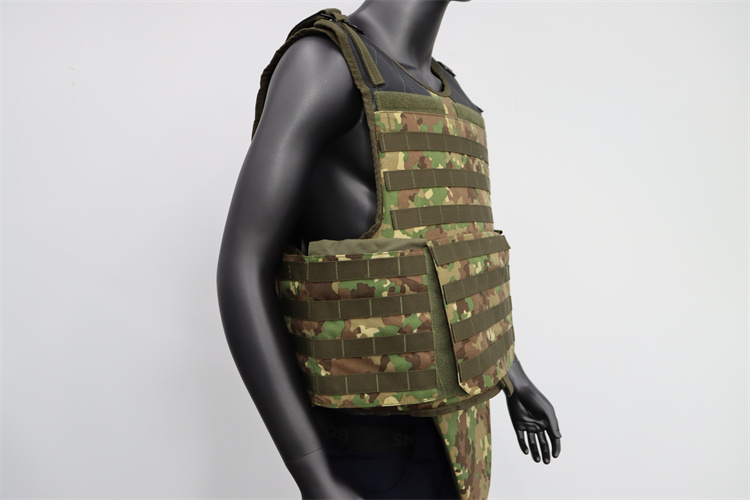
You must evaluate load-bearing capabilities for high-risk situations. A high-quality Tactical Vest integrates flawlessly into your existing equipment ecosystem. Assess laser-cut MOLLE compatibility closely. Officers need secure attachment points for medical pouches and radios. Look for advanced features like quick-release buckle systems. These allow rapid removal during medical emergencies. Scalability remains vital for unexpected active-shooter scenarios. Teams need the physical ability to insert heavier plates rapidly. A modular approach ensures maximum readiness.
When outfitting combat units, carrier requirements become extreme. A dedicated Military Vest must meet rigorous battlefield specifications. Review the plate carrier features closely. Shrapnel protection stands as a non-negotiable requirement. You must also ensure seamless integration. The carrier cannot interfere with issued combat belts or specialized communication gear. Evaluate reinforced drag handles on the back. These handles allow personnel to pull wounded colleagues to safety. Every strap and buckle must withstand brutal environments.
For standard security roles, daily durability matters most. Evaluate the outer shell materials of an everyday Protective Vest carefully. Look at the Cordura denier ratings specifically. High-denier nylon resists daily abrasions effortlessly. Moisture-wicking inner liners keep your officers comfortable during summer shifts. Easy laundering ensures proper hygiene across a large workforce. Anti-microbial treatments prevent odor buildup over time. Always prioritize daily comfort for routine patrols.
Material science dictates how protective panels perform under fire. You need to understand the underlying technology. This knowledge drives smart purchasing decisions.
Let us examine soft panels first. Traditional Aramid fibers possess a long history of reliability. Kevlar remains the most famous example. Aramid offers excellent heat resistance and flexibility. However, Ultra-High-Molecular-Weight Polyethylene (UHMWPE) now dominates the market. UHMWPE reduces overall weight significantly. It also improves flexibility for the wearer. You must balance thickness against thermal degradation risks. Some PE materials break down faster under extreme heat. Store them carefully away from extreme temperatures.
Hard plates present a completely different set of trade-offs. You generally choose between ceramic, steel, and pure PE plates. Evaluate the options using this basic operational breakdown:
Plate Material | Weight Profile | Protection Level | Durability & Maintenance |
|---|---|---|---|
Ceramic | Moderate | High (Stops Armor-Piercing) | Requires X-ray checks for hidden micro-fractures |
Steel | Heavy | Moderate to High | Extremely durable, creates dangerous spall fragmentation |
Pure PE | Ultra-Lightweight | Moderate (Stops Non-AP) | High durability, sensitive to extreme heat exposure |
Ceramic offers incredible protection against armor-piercing rounds. It absorbs the impact by shattering locally. However, ceramic requires careful handling protocols. You must conduct X-ray inspections regularly. This spots hidden micro-fractures. Steel remains very cost-effective. It lasts a long time and withstands physical abuse. Unfortunately, steel feels exceptionally heavy. It also creates a severe spall hazard. Bullet fragments can deflect upward into the wearer's neck. PE plates feel ultra-lightweight. They actually float in water. They reduce fatigue significantly. Yet, they cost much more per unit. They also typically fail against armor-piercing steel-core rounds.
You must insist on strict evidence-based selection. Never rely solely on marketing claims when buying bulk Body Armour. Demand independent, third-party ballistic testing reports. Look for compliance documents from certified labs. NTS-Chesapeake and OBL stand as industry leaders. Review the backface signature limits closely. The NIJ strictly mandates a maximum backface deformation of 44 millimeters. Even if a vest successfully stops the bullet, severe blunt force trauma occurs. Deep deformation causes broken ribs or lethal internal organ damage. Verify the laboratory data yourself before buying.
Even the best equipment fails if implementation goes wrong. Volume orders introduce complex logistical challenges. You must manage sizing, shipping, and quality control aggressively.
Fitment remains your highest logistical hurdle. Standard sizing charts often fail across a diverse workforce. A medium shirt does not translate to a medium ballistic panel. Poorly fitted armor exposes vital organs. It also digs painfully into the wearer's ribs. This drastically reduces compliance. You must measure the chest circumference accurately. You must also measure the true waist, not just the pant size. Most importantly, measure the seated torso length. Measuring from the clavicle to the naval while seated prevents the vest from riding up into the throat. You must organize custom measuring sessions. Alternatively, request full sizing runs from the manufacturer. A sizing run includes one physical vest in every possible size. Officers can try them on before the factory begins mass production.
Female-specific cut armor is absolutely critical for modern agencies. Standard flat panels do not conform to female anatomy. They create dangerous ballistic gaps near the armpits. They also press uncomfortably against the chest. You must require gender-specific ballistic paneling in your order. Specialized darting and structural seams provide proper contouring. This ensures complete vital organ coverage. It also keeps daily compliance rates high. Never issue male-cut vests to female personnel.
Evaluate the manufacturer supply chain and lead times carefully. Some vendors lack the manufacturing capacity to fulfill large orders quickly. Define your acceptable delivery windows in writing. Follow these steps to secure your timeline:
Request proof of raw material inventory from the vendor prior to signing.
Establish a phased delivery schedule for orders exceeding 500 units.
Include strict penalization clauses for late bulk shipments in your contract.
Assign an internal project manager to track critical shipping milestones weekly.
Delays compromise your operational readiness. Do not accept vague delivery promises from any supplier.
Finally, never skip the Test & Evaluation (T&E) phase. This critical phase defines your shortlisting logic. You should never sign a bulk contract without fielding physical samples first. Require five to ten sample units from the final vendor candidates. Issue these units to active operators. Run a mandatory 30-day wear test. Ask the wearers to evaluate daily comfort. Have them report on general mobility during dynamic tactical drills. Monitor heat retention during long summer shifts. Real-world physical feedback prevents massive procurement disasters. Listen closely to the operators who actually wear the gear.
Bulk procurement demands a highly structured, objective approach. You must map operational threats directly to appropriate materials. Verifying physical fitment across your entire roster ensures the gear actually gets worn. Focus entirely on evidence-backed safety. Avoid compromising quality simply to find the lowest initial bidder. Cheaply manufactured gear often leads to catastrophic field failures. It also causes poor user compliance. Take immediate, decisive action today. Draft a structured Request for Proposal (RFP) for your department. Explicitly demand current NIJ compliance letters from all bidding vendors. Insist on receiving physical T&E samples before finalizing your vendor selection. Protect your team properly.
A: Ballistic materials naturally degrade over time. Aramid and PE panels typically maintain their ballistic integrity for five years. Store them flat in a climate-controlled environment away from direct UV light. High heat and extreme humidity accelerate material breakdown. Always check the manufacturer expiration date printed on the panel label.
A: You should avoid mixing components. NIJ certification applies to the complete system. Inserting a panel into an unapproved carrier voids the certification. It may alter how the panel sits against the body. This creates dangerous coverage gaps during a ballistic event.
A: Lead times vary based on material availability and vendor capacity. Standard bulk orders typically require 60 to 120 days for manufacturing and delivery. Custom sizing runs or specialized female cuts often add several weeks to the timeline. Always establish written delivery schedules upfront.
A: Purchase a strategic surplus of common sizes during your initial bulk order. Avoid exclusively ordering custom-measured units if your turnover rate is high. Rely on multi-adjustable carriers. Keep a documented inventory grid to rapidly match new hires with available stock.


